
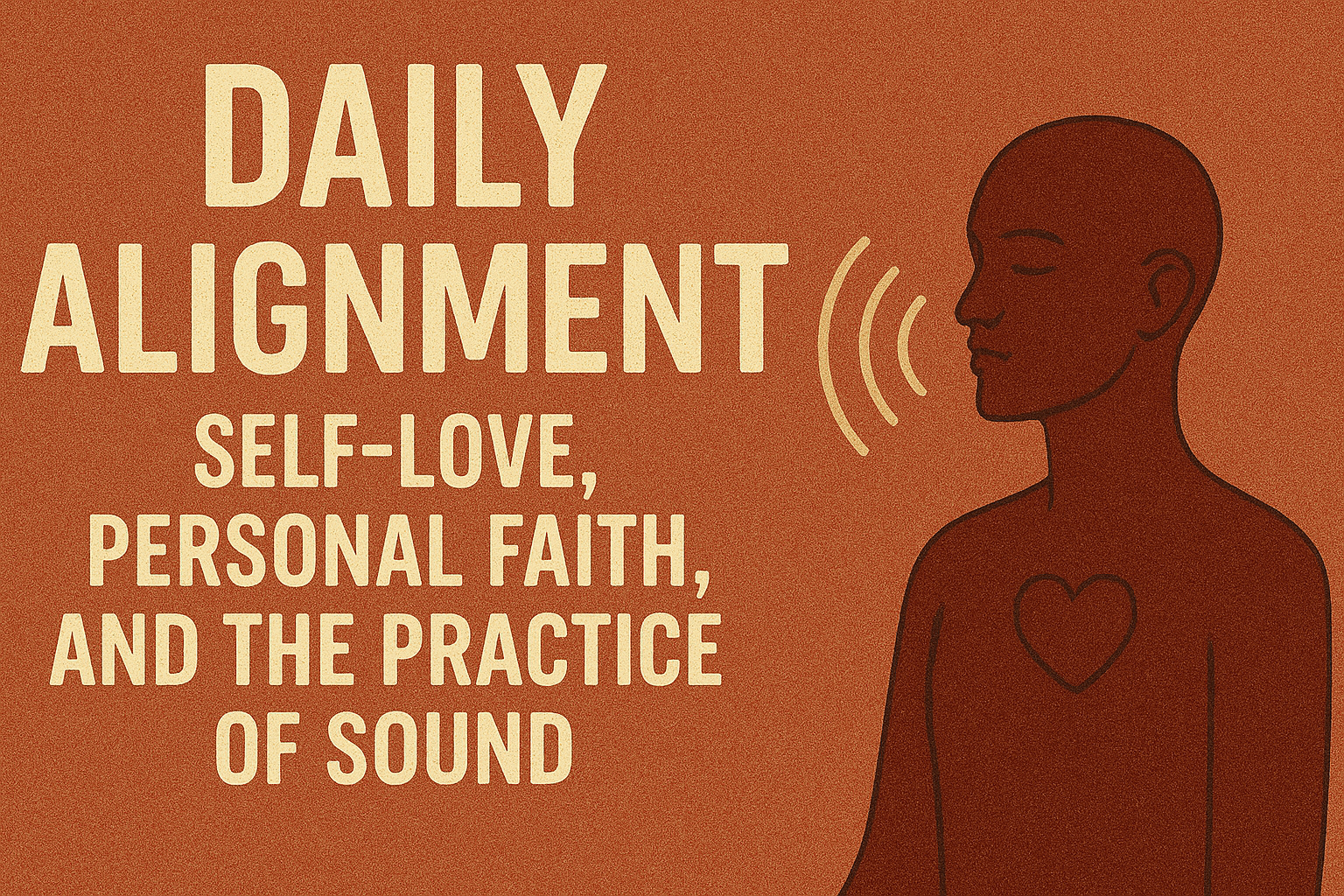
This piece distills a candid group dialogue into a clear guide. The heart of the message is simple: start each day aligned, anchor yourself in self-love, relate to “God” in your own way, and use sound, breath, and grounding to keep your frequency steady.
1) Begin the Day Aligned
- Morning notes: Bernardet posts short reminders on Facebook—read them first thing. They’re written at dawn to prime a grateful, focused mind.
- Set up access: Create or reactivate your Facebook account. You’ll be added as a moderator so these posts surface immediately. Share reflections if you’re moved to; the page is a living practice space, not a display case.
Why this matters: When you’re not yet able to “hear” your own inner guidance clearly, consistent prompts help you tune in. Over time, you’ll notice a different quality to your days—calmer, clearer, more intentional.
2) “God,” in Your Own Words
In this group, “God” is personal. It may mean Source, the universe, spirit, conscience, or a felt sense of loving intelligence. We don’t assign a single image or doctrine.
- Guidance shows up as insight, emotion, synchronicity, or subtle shifts in energy.
- Different upbringings, different names. We respect them all, and we keep the focus on lived practice over labels.
- Faith as experience: The question isn’t which name you use; it’s whether the relationship helps you live with courage, compassion, and clarity.
3) On Karma, Fairness, and Suffering
Life isn’t always “fair.” Children fall ill; good people face impossible things. In this framework, karma explains part of that—patterns and debts we’re here to work through.
- Core stance: We don’t use karma to blame. We use it to take responsibility now—to minimize new entanglements and meet what comes with dignity.
- Practice over speculation: Rather than debating past lives, we focus on this life’s choices: forgiveness over revenge, presence over rumination, humility over pretense.
4) Separation & Detachment (Without Bitterness)
As you practice, you may feel “separate” from some social circles—not superior, just different in tone. Honor that.
- Detachment means loosening unhealthy attachment to opinions, approval, or drama.
- Boundaries are allowed. If a space feels misaligned, limit exposure with respect and without contempt.
- Sensitivity varies. Some people are deeply attuned to “energies” in places or conversations; care for yourself accordingly.
5) The Science of Feeling Better: Frequency
Think of mood and vitality as frequency. Overwhelm and illness tend to lower it; breath, sun, movement, and coherent sound tend to raise it.
Core practices
- Grounding: Sit on the floor or step outside. A few minutes of sun (morning is ideal) helps reset your system.
- Breath: Inhale through the nose, exhale through the nose, gently and steadily. Use this to calm and build stamina.
- Sound bowls: Because the body is largely fluid, vibration travels well. A higher-frequency metal bowl is used to synchronize the system.
How to play (20-minute protocol)
- Sit on the ground; spine tall, jaw soft.
- Set an intention: self-love & alignment.
- Strike or circle the bowl slowly. Let the tone fade; listen more than you try.
- Keep attention at the heart—notice warmth, spaciousness, or simple quiet.
- When the mind wanders, return to breath and tone.
Play first—before calling a friend, scrolling, or problem-solving. Let resonance do the heavy lifting.
6) Community Logistics (So the Practice Sticks)
- Come, even when you don’t feel like it. This is a niche group by design; showing up is part of the medicine.
- Use the online thread. If you feel sparked to share, post. Momentum is communal.
- Focus while here. Arrive, ground, bowl, breathe. Keep chit-chat minimal until you’re centered.
7) Self-Love Is the Center
You can’t pour from an empty cup. This work emphasizes self-love not as vanity, but as the condition for loving anyone well.
- Notice your body: “I am whole as I am today.”
- Thank your heart: “How much is this heart worth?” (Answer: beyond price.)
- Let the bowl practice be for you—not your parents, partner, or friends. When you truly care for yourself, care for others becomes cleaner and kinder.
8) A Word on Religion & Social Spaces
Many find comfort in religious communities; others don’t. The group’s stance is pragmatic: go where your practice deepens and your integrity grows. If a setting feels performative or gossipy, keep a gentle distance. The point isn’t to judge—it’s to guard your frequency.
9) What Today Looks Like
- Read the morning note.
- Sit on the ground.
- Breathe nasally, unforced.
- Play the bowl for 20 minutes with the intention of self-love and alignment with your personal sense of the divine.
- Carry that steadiness into your day.
If you don’t own a bowl, borrow the group’s or start with breath + grounding until you can.
Closing
Positive doesn’t mean pretending. It means choosing responses that keep you clear, kind, and strong. Detach from what drains you, forgive faster than you used to, and practice daily—even briefly. With time, the blend of morning alignment, personal faith, breath, sound, and self-love doesn’t just change your mood; it changes your life’s tone.